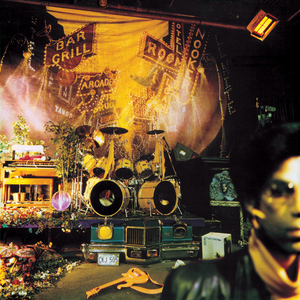
For this week’s Second Listen Sunday, I wanted to take a moment to celebrate the legendary Prince Rogers Nelson and his ninth studio album, “Sign o’ the Times.” As fans may know, in 1987, Prince released a concert film of the same name, which is set for a limited release in IMAX theaters starting Thursday, August 28th. It feels only fitting to highlight the album this week.
Prince had already established himself as a singular talent even before “Purple Rain” and “1999”. However, with “Sign O’ the Times”, the multihyphenate risked everything on a double LP that was sprawling, messy, confronting, beautiful, vital, and exhausting. He ramped up experimentation from “Parade”, dialing back the shiny gloss and diving headfirst into gritty funk, fuzzy rock, gospel, and unadulterated social commentary, creating a sound that was truly unique and experimental.
The album’s opener and lead single, “Sign o’ the Times,” is a bracing bit of minimalism. The Spartan drum machine and squealing guitar riffs serve as a backdrop for Prince to preach on the realities of AIDS, gang violence, and political corruption. It’s a searing wakeup call to begin the album, but it’s also a clear message that this isn’t party music. Prince goes in all directions over the next 19 tracks in the kaleidoscopic showcase that followed. The album was recorded in Prince’s home studio, allowing him complete creative control and the freedom to experiment with different sounds and styles.
“Play in the Sunshine” and “Housequake” are welcome injections of pop pleasure. The latter track is one of Prince’s sexiest, goofiest, and most fun jams, full of self-deprecating humor and hip-thrusting vocal runs. “U Got the Look” is a massive slice of pop-rock hedonism, with blaring synths and Sheena Easton shouting lusty come-ons in Prince’s infamous leering croon. It became one of the album’s biggest singles for a reason.
While “If I Was Your Girlfriend” is one of his most daring vocal exercises, as Prince slips into a buttery falsetto to push the boundaries of gender roleplay, intimacy, and sexuality, resulting in one of his most experimental and lyrically graphic songs to date.
“I Could Never Take the Place of Your Man” is an earworm pop-rock jam that showed off Prince’s ability to write super-accessible, guitar-driven hits. “Strange Relationship” doubles down on eccentric production and unusual grooves. On “Sign O’ the Times”, Prince paints in broad strokes with massive, inescapable pop songs, but the opposite is true as well. He unflinchingly leaves edges rough if it means leaving the magic intact.
The true treasure of the record, though, is “Adore.” Hidden near the end of the second disc, the slow-burning ballad is one of Prince’s most transcendent performances. His voice practically tears through the speakers as he belts out the song’s tender lyrics in glorious falsetto.
Prince weaves in and out of a gorgeous bed of understated piano and swelling horns, and the result is an utterly sensual, touching, and angelic love song that Prince made sound both stunningly private and eternal. “Adore” isn’t just the best song on “Sign O’ the Times”. It’s one of the best ballads in Prince’s entire catalog.
“Sign o’ the Times” is messy and sprawling but also necessary. It captures Prince in all his incredible contradictions: political poet, funk virtuoso, pop auteur, and master seducer. It’s an exhausting listen, but it’s also an album that sounds more vital now than ever, nearly 40 years after its release, a testament to its enduring relevance.
Final Grade: A
“Sign O’ the Times” is available on all streaming platforms. Check your local listing for showtimes for the concert film in IMAX..