



Search
Picture of Derrick Dunn

Derrick Dunn

“Bodycam” Review: The Camera Never Lies—But It Might Haunt You

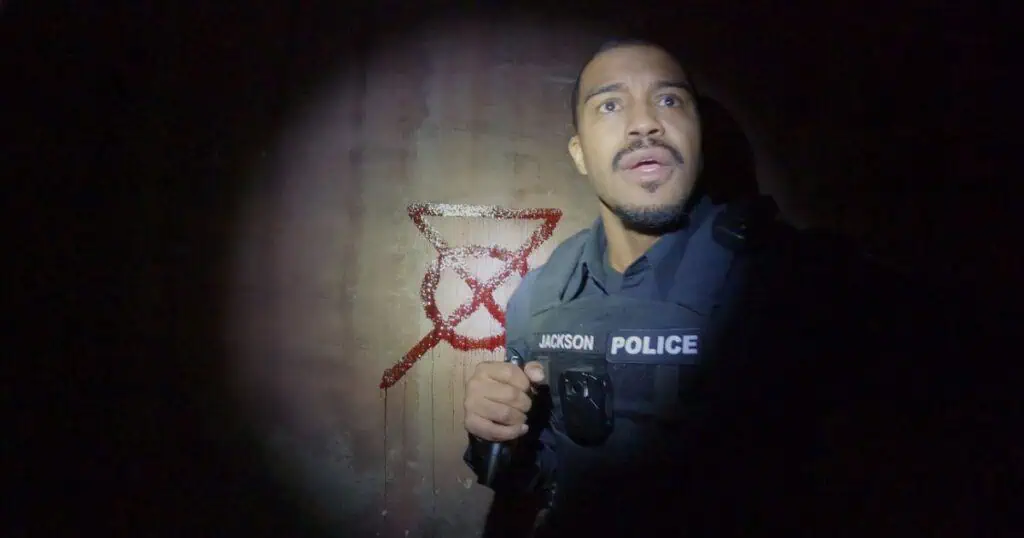
Horror has always thrived on transforming everyday technology into something terrifying.  In director Brandon Christensen’s supernatural thriller “Bodycam”, the source of fear is literally strapped to the characters’ chests.  The film unfolds entirely through police body-camera footage, placing viewers inside a tense, real-time nightmare where every decision—and every mistake—is recorded on tape.

The story follows two police officers responding to what appears to be a routine domestic disturbance.  Within moments, the situation spirals into tragedy.  A fatal shooting occurs, panic ensues, and the officers make a decision that will haunt them for the rest of the night: they attempt to cover it up.  Unfortunately for them, their body cameras have recorded everything.  What initially feels like a moral dilemma soon becomes something far stranger as the officers begin to suspect that forces beyond their control may be closing in.

Christensen fully embraces the body-cam format, which gives the film an immediacy that traditional horror often struggles to achieve.  Instead of polished cinematography, viewers are presented with shaky angles, dim hallways, and half-seen shapes in the darkness.  This effect is unsettling because it feels authentic—the camera isn’t trying to scare you; it’s simply documenting events as they unfold.

Jaime M. Callica anchors the film as Officer Jackson, delivering a performance that balances authority with quiet desperation.  Opposite him, Sean Rogerson plays Officer Bryce with a nervous energy that intensifies as the night progresses.  Their dynamic works because the film never allows them to escape the consequences of their choices; every step forward only deepens the hole they have dug for themselves.

The film’s title may remind some viewers of the same-titled2020 supernatural thriller of the same name starring Mary J. Blige.  While both films utilize police body cameras as a narrative device, Christensen’s film takes a different approach.  Blige’s film leaned into social commentary and revenge-driven ghost story elements, whereas this version focuses more on tension, paranoia, and the unsettling feeling that the officers may not be alone.

At just over 75 minutes long, the film moves quickly and rarely pauses to explain itself.  This concise runtime works to its advantage, maintaining tight tension and keeping the story on track.  The limited perspective can occasionally restrict character depth, but it also heightens the claustrophobic atmosphere.

In the end, “Bodycam” is a small horror film with a clever concept and just enough supernatural menace to keep audiences on edge.  It may not redefine the genre, but it demonstrates that even a simple camera—and the truth it captures—can be terrifying.

Final Grade: B

“Bodycam” is streaming on Shudder now.

Movie Clappers

More reviews to explorer

Album Review : Jack Harlow, Monica

If you had told me ten years ago that I would fall behind on music, I would have laughed it off. But as they say, we are all adulting now. Thankfully, friends like Edward Bowser from SoulInStereo.com and Brandon Sullivan from Shatter The Standards keep my musical interests alive.

‘Dead Man’s Wire’ turns a true-crime nightmare into a crowd-pleaser

On the morning of February 8, 1977, Tony Kiritsis walked into a mortgage office in Indianapolis convinced the system had finally turned on him. What followed was one of the most unsettling media spectacles of the decade: a 63-hour hostage standoff in which Kiritsis literally wired a sawed-off shotgun to both his victim’s neck and his own chest. It was desperation theater, broadcast live, raw and ugly, and fueled by a man who believed grievance was the same thing as righteousness.

Facebook
Twitter
LinkedIn