Director Paul Greengrass has never been one to shy away from chaos. From “United 93” to the Bourne series, his handheld urgency has defined a cinematic style that thrives in the midst of disaster. With “The Lost Bus,” co-written alongside Brad Ingelsby, Greengrass shifts focus from car chases to firestorms, concentrating his restless camera on the human cost of one of America’s worst natural disasters—the 2018 Paradise fire.
Backed by Apple, the film feels both immediate and necessary, especially as wildfires continue to dominate headlines worldwide. The story centers on Kevin McKay, played by Matthew McConaughey, a school bus driver whose life has been reduced to a series of quiet disappointments.
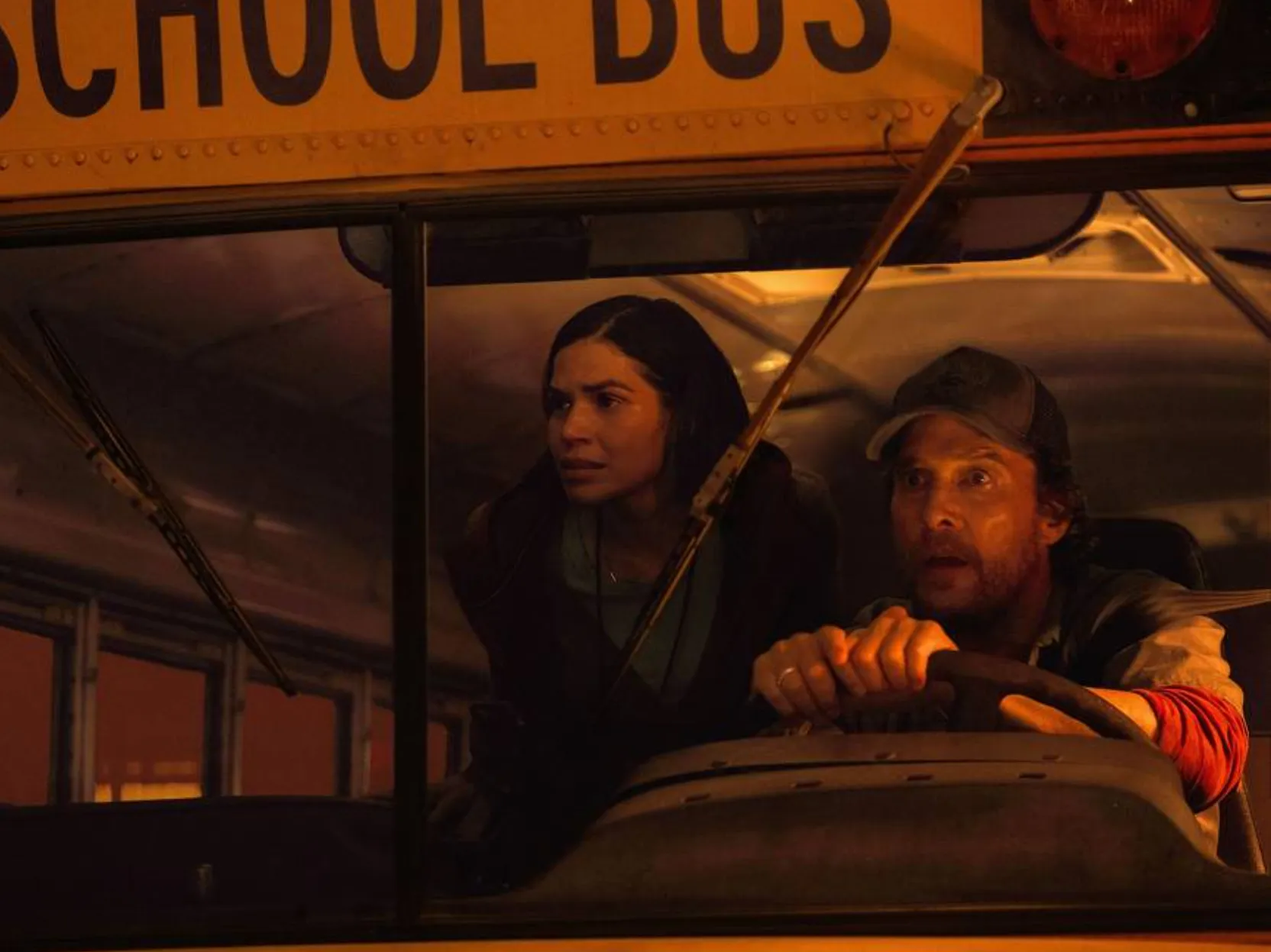
McConaughey approaches the role with restraint, avoiding melodrama and grounding the character as an everyman suddenly faced with the unthinkable task of navigating a bus full of children through an inferno. While this role may not rank among his career-defining performances, McConaughey remains steady and believable, embodying a reluctant hero thrust into circumstances far beyond his control.
America Ferrera joins the story later and injects it with emotional urgency. As a teacher who refuses to leave her students behind, she quickly becomes the heart of the narrative. Ferrera’s warmth contrasts with McConaughey’s stoicism, and their dynamic brings the film’s most human moments to life. Together, they represent the film’s central theme: in times of disaster, survival is a communal effort, not an individual one.
Greengrass’s direction excels amid the chaos. He portrays the fire as if it were a living, breathing monster—flames consuming homes and landscapes, collapsing in real-time. Aerial shots provide scope, while the shaky handheld work immerses us in the smoke and confusion alongside the children. The relentless sound design includes sirens, crackling embers, and the panicked chatter of kids who don’t fully understand what’s happening. The overwhelming effect is precisely what Greengrass intends.
However, “The Lost Bus” stumbles in its first act. The setup lingers too long on McKay’s fractured personal life, hitting familiar “divorced dad” beats that don’t contribute much to the story. But once the fire ignites, Greengrass finds his stride, and the film rarely loses momentum.
Visually, Apple spares no expense; the result is often terrifyingly beautiful. Flames stretch across the horizon like tidal waves, reminding us of the fragility of human constructs when nature becomes hostile.
At its core, “The Lost Bus” is less about disaster and more about resilience. It is a tribute to ordinary people who became extraordinary under impossible circumstances—a story that lingers long after the smoke has cleared.
Final Grade: B+
“The Lost Bus” is available to stream on Apple TV+ this Friday.