It’s tempting to compare *The Testament of Ann Lee* to “The Brutalist,” but that comparison flatters this film more than it deserves. Writer-director duo Mona Fastvold and Brady Corbet have previously demonstrated their capacity for elegance, with “The World to Come” being their most complete and emotionally coherent work. However, this latest effort feels more enamored with its own seriousness than with the fundamentals of storytelling.
Inspired by a Shaker hymn that Fastvold encountered during her earlier research, “The Testament of Ann Lee” aims to recontextualize the origins of the Shaker movement through a feminist lens. On paper, it presents fertile ground: religious persecution, gendered power structures, and grief transmuted into doctrine. In execution, however, the film struggles to transform these ideas into anything resembling narrative momentum.
Amanda Seyfried stars as Ann Lee, a woman spiritually and physically broken after the deaths of her four infants. She receives a vision that positions her as the female embodiment of Christ’s second coming. Seyfried, working with far less than she deserves, is the film’s only consistent anchor.
She portrays Ann with a quiet gravity, avoiding grandiosity and opting instead for a subdued, inward intensity. Her performance is rooted in restraint, and it often feels like the only element preventing the film from drifting into abstraction. If there is any reason to watch *The Testament of Ann Lee*, it begins and ends with her
A fellow critic mentioned that the film is best experienced in a theater, and I agree—its 35mm textures and controlled compositions demand a big screen. Even then, it’s a strict watch. The film insists on patience without offering much emotional reciprocity in return.
I admire the audacity of what Fastvold and Corbet are attempting here, but admiration doesn’t automatically translate to engagement. Like *The Brutalist*, the film maintains a cold, clinical distance, keeping the viewer at arm’s length and observing rather than feeling.
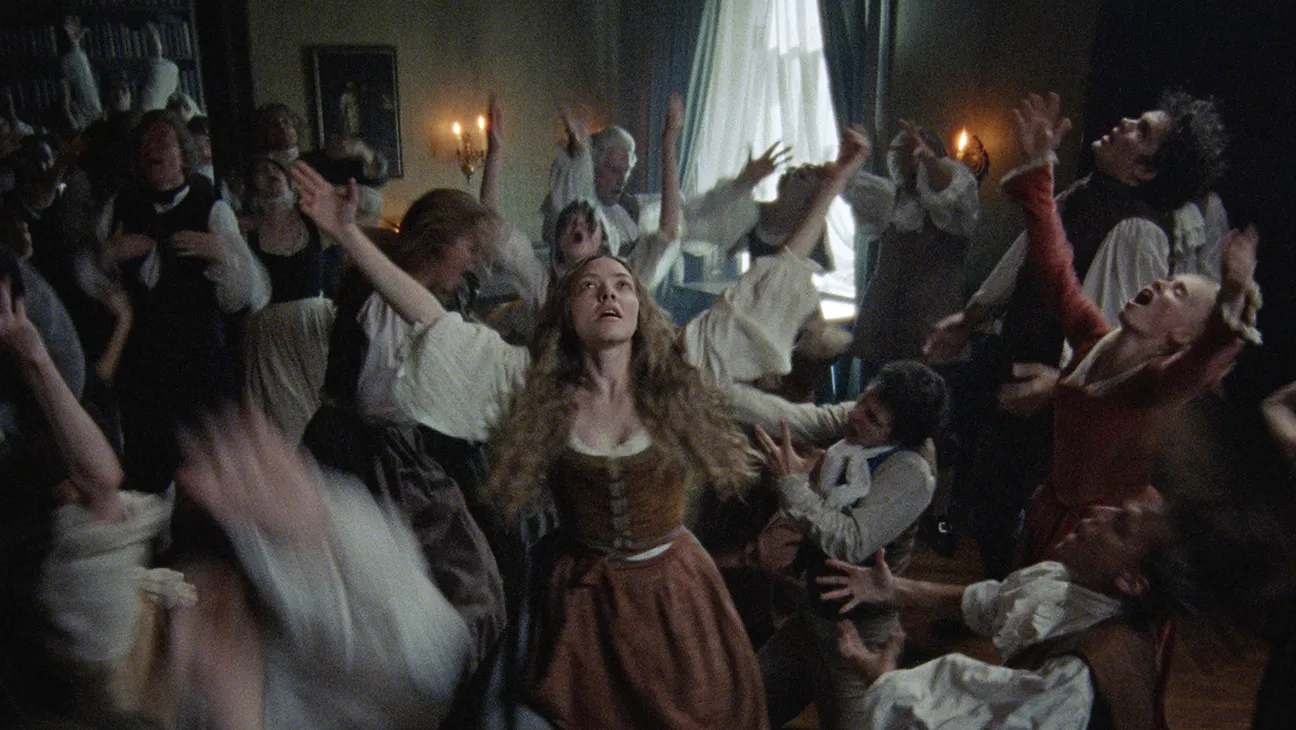
The film’s self-described musical elements compound that detachment. What passes for music often resembles ritualized chanting or repetitive movement, which is more numbing than expressive. While the choreography, courtesy of Celia Rowlson-Hall, occasionally jolts the film awake visually, these sequences ultimately feel ornamental rather than revelatory. They don’t deepen character or advance themes; instead, they stall the film.
Corbet and Fastvold seem more interested in mood than in clarity, in gestures rather than in insight. The Shakers’ progressive ideals—such as pacifism, celibacy, and racial and gender equality—are presented as bullet points rather than lived convictions. Lewis Pullman, as Ann’s loyal brother, delivers an acceptable performance but is largely sidelined, reflecting a broader issue: the film gestures toward complexity without fully committing to it.
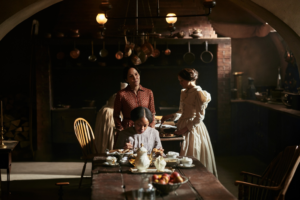
Shot on film and handsomely composed, *The Testament of Ann Lee* looks the part of a serious historical drama. However, beauty and intention can only carry a movie so far. What’s lacking here is urgency, conflict, and a sense that the filmmakers have anything new to say beyond the aesthetics of belief.
Final Grade: C
“The Testament of Ann Lee” opens in Limited Release on Christmas Day and goes wide early next year.