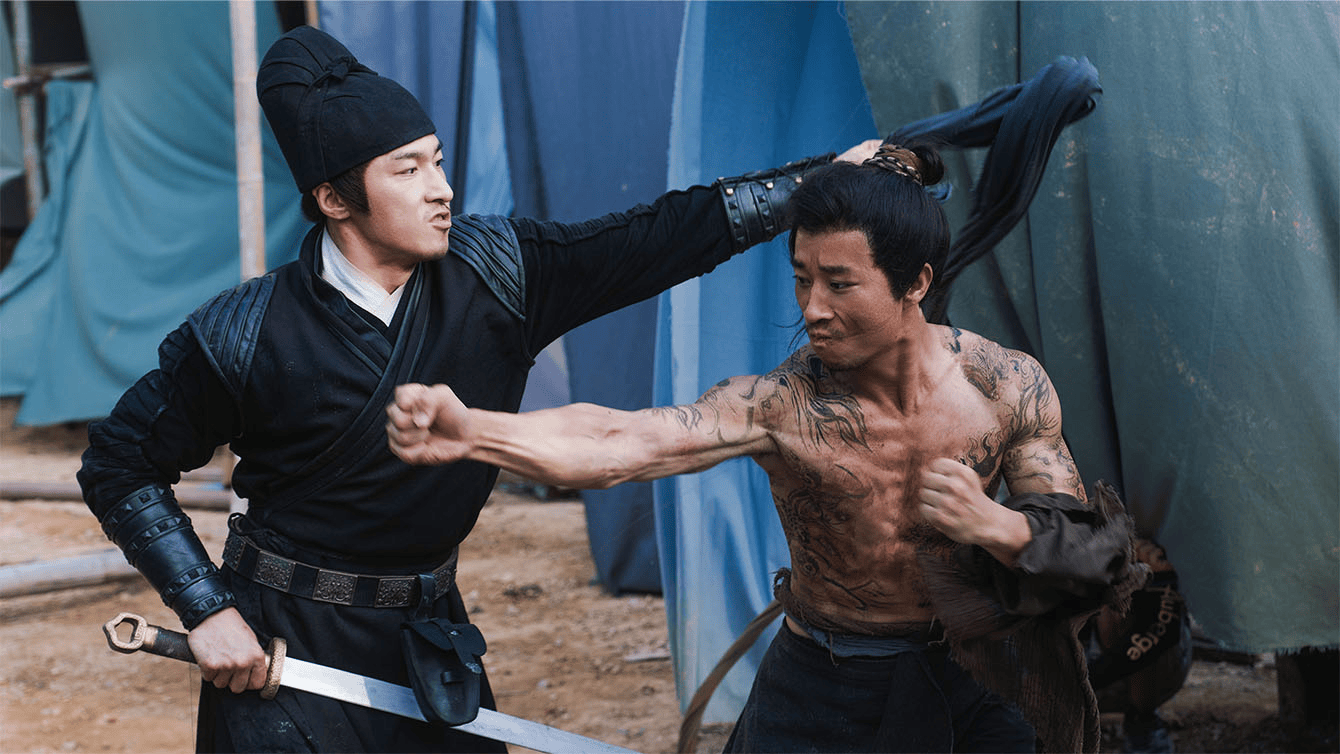
“The Butcher’s Blade” offers a refreshingly raw experience. In an era where many action films are bogged down by CGI chaos and superhero excess, this gritty martial arts thriller dives right into the heart of its story. Directed with conviction by Liu Wenpu, the film serves as a throwback to the hard-edged revenge cinema that once dominated grindhouse theaters and kung fu VHS marathons.
At the center of the narrative is Constable Xue Buyi, a man who initially feels more like the town’s punching bag than a heroic warrior. He faces mockery from civilians, dismissal from corrupt officials, and continual humiliation despite his genuine attempts to do the right thing.
One of the film’s most striking early moments occurs when Xue arrests a man accused of a horrific crime, only to see the justice system disregard the case entirely. This serves as a brutal reminder that, in this world, morality holds little weight when power and money control the situation.
What makes “The Butcher’s Blade” particularly effective is how it patiently develops Xue’s transformation. He is not introduced as an invincible martial arts expert; instead, he is weary, hesitant, and, at times, rather pitiable. In one memorable scene, Xue is humiliated in public after chugging bottles of soy sauce while unsuccessfully defending a struggling noodle stand owner against a ruthless landlord. Instances like this provide the character with emotional depth and humanity before the real action begins.
When the violence finally erupts, the film delivers thrilling, hard-hitting combat sequences. Each strike feels impactful, and the sound of weapon clashes resonates powerfully. The choreography prioritizes grounded brutality over flashy acrobatics, enhancing the realism of the violence. Fans of classic wuxia tales and gritty revenge thrillers will appreciate the film’s commitment to practical stunt work and disciplined fight choreography, rather than relying on hyperactive editing.
Visually, “The Butcher’s Blade” excels in its depiction of muddy streets, dim corridors, and smoke-filled taverns, all of which contribute to an atmosphere steeped in desperation and corruption. The film has a certain grittiness that becomes one of its greatest strengths.
Beneath the blades and broken bones lies a keen commentary on cowardice, honor, and the emotional toll of surviving in a broken system. Xue’s journey from a ridiculed constable to a determined fighter provides the film with a powerful emotional backbone, elevating it above typical streaming action fare.
While “The Butcher’s Blade” may not reinvent the martial arts genre, it clearly understands why audiences fell in love with it in the first place.
Final Grade “ B+
“The Butcher’s Blade” is available digitally now.