



Search
Picture of Derrick Dunn

Derrick Dunn

“Pike River” is less about tragedy than what happens when we stop asking questions

There are true-story dramas that feel engineered for awards season, while others serve as acts of witness. “Pike River,” directed with sober conviction by Robert Sarkies and written by Fiona Samuel, firmly belongs in the latter category—a film more concerned with accountability than with catharsis.

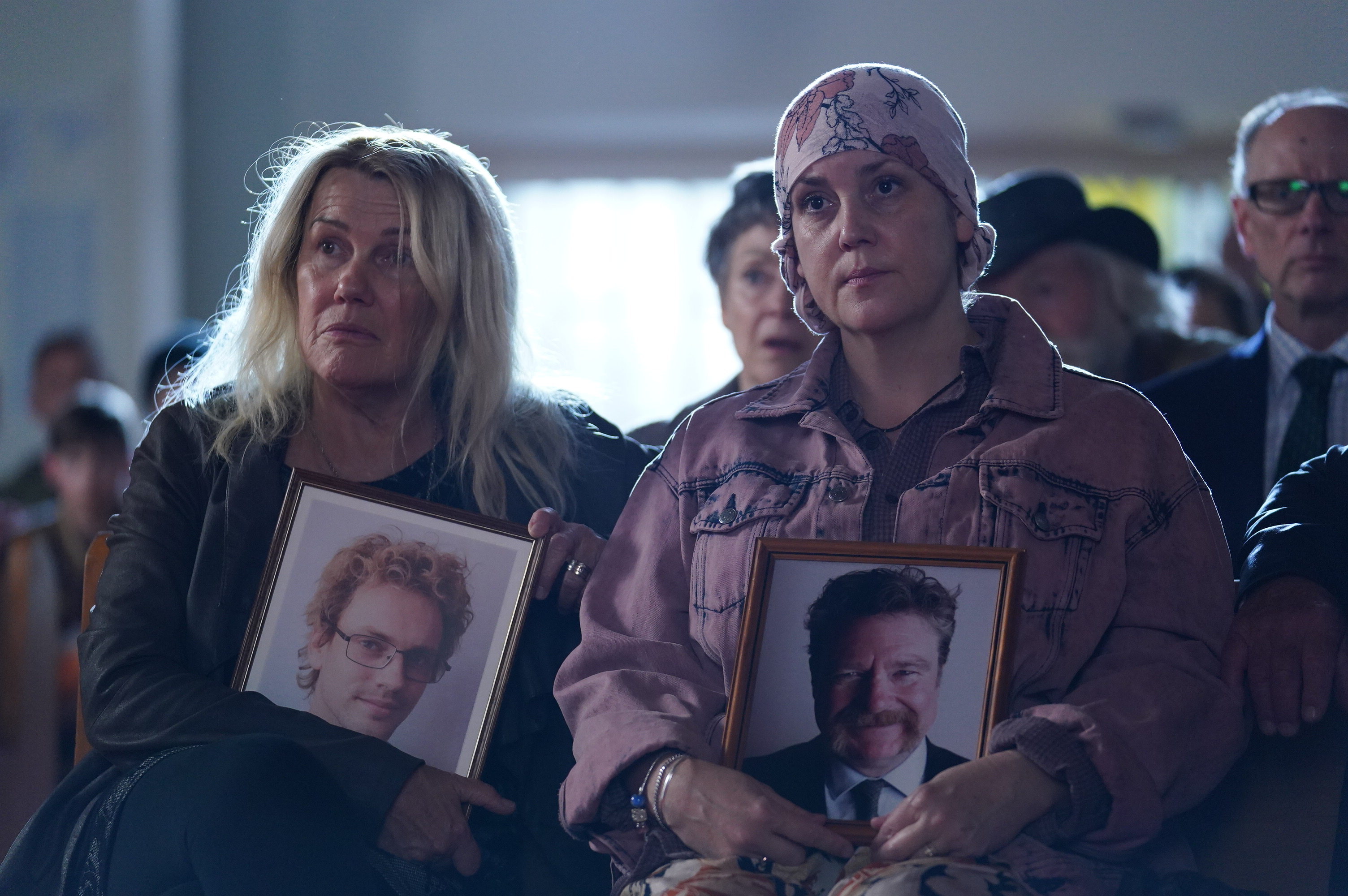
Set in the aftermath of the 2010 Pike River Mine explosion that claimed the lives of 29 men, the film portrays tragedy not as spectacle but as an ongoing wound.  Melanie Lynskey and Robyn Malcolm anchor the narrative as Anna Osborne and Sonya Rockhouse, two women connected by grief—Anna’s husband and Sonya’s son were among the dead.  They are fueled by a resolute refusal to allow the disaster to vanish into bureaucratic obscurity.  This is not a courtroom thriller in the vein of “Erin Brockovich,” nor is it a melodramatic elegy.  Instead, it’s a procedural reckoning, built on persistence, paperwork, and moral pressure.

Lynskey, who has mastered the art of quiet devastation, portrays Anna as a woman whose gentleness conceals an iron core.  Malcolm, always formidable, channels Sonya’s rage and sorrow into something resembling political will.  Their friendship becomes the film’s emotional heart—not sentimentalized but forged in shared exhaustion and a common purpose.  It is in their exchanges during inquiry hearings and press conferences that the film finds its most poignant moments.

Samuel’s script resists offering tidy victories, instead illustrating the years-long struggle against corporate obfuscation and institutional inertia.  Sarkies stages the disaster and its aftermath with restraint, allowing the New Zealand landscape to loom with an almost accusatory beauty—a constant reminder of what was lost beneath it.  The film ultimately addresses issues of power: who wields it, who abuses it, and who challenges it when the cost of silence becomes too great to bear.

“Pike River” may not deliver the easy uplift that audiences often seek from inspiring true stories.  Instead, it offers something rarer and more honest: a portrait of ordinary women who refused to be powerless, and in doing so, forced a nation to confront itself. “Pike River” is not a crowd-pleaser; it’s a film that stirs the conscience—and those tend to linger far longer.

Final Grade: B+

“Pike River” is **IN THEATERS & ON DIGITAL FRIDAY, JANUARY 30**.

Movie Clappers

More reviews to explorer

Facebook
Twitter
LinkedIn

Apple TV+’s “Your Friends & Neighbors” Season 2 Expands Its World—and Its Impact

Picking up after Coop (Jon Hamm) narrowly avoids prison, the season finds him still navigating moral gray areas, even after realizing that Sam (Olivia Munn) framed him for murder. His relationship with ex-wife Mel (Amanda Peet) remains complicated—emotionally unresolved yet intentionally restrained. The show avoids easy resets, allowing its characters to grapple with the discomfort they’ve created.

Review: “Imperfect Women” Is A Stylish Slow-Burn Anchored by Strong Performances

Apple TV+’s “Imperfect Women”, created by Annie Weisman and directed in part by Lesli Linka Glatter, presents a polished, character-driven mystery that reveals its strengths over time. Centered around the unraveling of a decades-long friendship, the series relies more on emotional depth than on shock value, and this choice largely pays off.