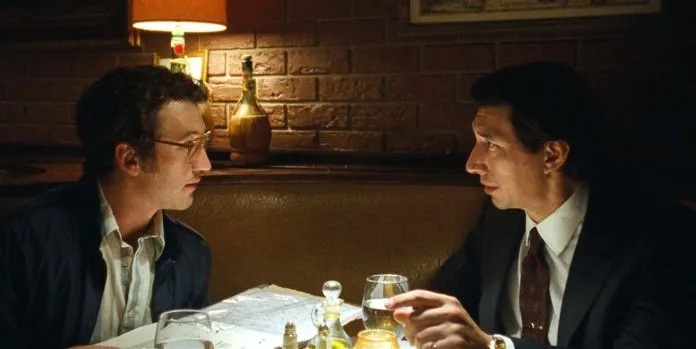
James Gray returns to Queens with “Paper Tiger,” following up on “Armageddon Time,” and it’s clear why he wanted to spend more time there. The story takes place in 1986, when the stakes are higher, and trouble with the Russian mob looms.
However, what resonated most with me were the personal details that made the family feel relatable, as if they were people Gray might have grown up around. There’s a distinctive quality to how he films their home and captures their conversations.
You can sense he understands exactly how long someone in that house would let an uncomfortable silence linger before breaking the tension with a joke.
Miles Teller portrays Irwin Pearl, a husband and father whose son is preparing for college. Adam Driver plays his brother Gary, a former cop whose self-assuredness makes him seem like the type of person you’d want on your side during complicated deals.
Unfortunately, that same confidence contributes to their troubles. The brothers spot an opportunity to get ahead, and by the time they realize the true cost of their arrangement with the Russian mob, the rest of the family is already caught up in it.
This film is characteristic of a James Gray slow burn, with action unfolding in brief moments. Two particular sequences had me leaning forward in my seat, showcasing Teller and Driver’s ability to convey tension. Driver can evoke nervousness simply by being overly confident, while Teller effectively illustrates the moment his character realizes the brother he trusted to guide him through a situation may have no idea how to help him escape.
I won’t provide specifics, but those scenes resonated with me because Gray had already invested time in making me care about what these characters stood to lose.
Scarlett Johansson adds welcome humor as Teller’s wife, Hester, and I appreciated how seamlessly she fit into the household dynamics. There’s certainly a version of this movie where she could have played a more significant role, particularly as her personal struggles intersect with the larger narrative.
I would have gladly spent more time with her character. She helps to establish what an ordinary day looks like for the family, which amplifies the intensity once the brothers start bringing their troubles home.
As “Paper Tiger” lingers inside that wallpapered house, I increasingly understand why Gray keeps taking us back there. A gangster film can derive plenty of tension from a threat exchanged across a table, but Gray captures just as much from the thought of returning home afterward, sitting down with family, and attempting to discuss anything else.
That’s the aspect of the film that lingered in my mind even after it concluded.
Grade: B+
“Paper Tiger” is in limited release now and expands out wide on 20 Nov.