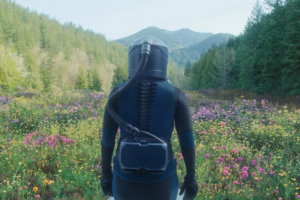
Director Zak Hilditch begins the 2026 movie season with the zombie thriller “We Bury the Dead,” produced by Vertical Entertainment. Hilditch also wrote the film’s screenplay.
There’s a distinct chill that settles in when the film begins—not the adrenaline rush of a genre jump scare, but a slower, more existential dread stemming from a world quietly broken beyond repair. A misguided U.S. military experiment in Australia wipes out more than half a million people in an instant; their brains fail.
Death arrives not with spectacle, but with silence. Stranger still, some people return—not as ravenous monsters, but as incomplete beings, walking reminders that the boundary between life and death has become dangerously thin.
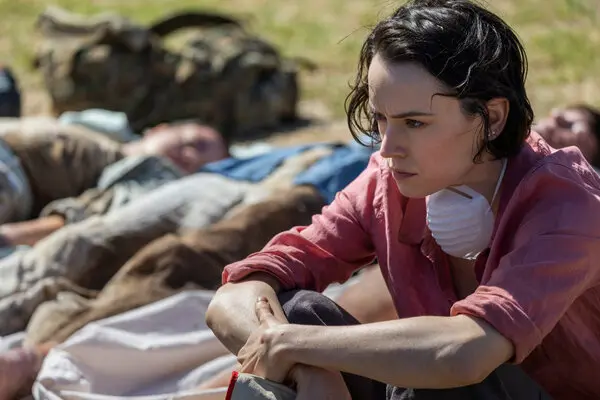
Ava Newman (Daisy Ridley) enters this landscape carrying an unimaginable burden: uncertainty. She joins a burial detail in Tasmania, scouring abandoned homes and mass graves, driven by the faint hope that her husband, Mitch (Matt Whelan), may be among those who survived—or partially did.
Accompanying her is Clay (Brenton Thwaites), whose breezy, almost evasive demeanor comes across less as optimism and more as a coping mechanism stretched thin. What unfolds is less a zombie road movie and more a procession of grief, stitched together by long silences, ruined domestic spaces, and lingering unanswered questions.
The film’s greatest strength lies in its restraint—when it actually commits to it. Ridley delivers a weary, introspective performance as Ava, capturing the nuance of mourning, which isn’t always loud. The most poignant moments arise from the margins: a devastated soldier unable to move on from his loss and a funeral scene that pauses the narrative just long enough for genuine emotions to surface. These sequences suggest a version of the film that might have been quietly devastating instead of intermittently familiar.
Unfortunately, this familiarity is where *We Bury the Dead* falters. Director Zak Hilditch appears torn between creating an intimate meditation on loss and reassuring genre fans that there will indeed be undead encounters. The result is a film that straddles two impulses without fully satisfying either.
The action beats arrive as if on cue but often feel forced, while stretches of stillness may test the patience of viewers expecting more momentum. It’s not that these familiar conventions are poorly executed; they aren’t necessary.
Visually, the film often impresses, capturing Australia’s desolate beauty with a mournful reverence. The compositions linger as if reluctant to move on, echoing the emotional stasis of its characters. In the end, “We Bury the Dead” remains a near-miss: thoughtful, somber, and occasionally powerful, yet reluctant to fully trust its quieter instincts.
Cinephiles may admire its ambition, while zombie fans might respect its seriousness. However, both may leave wishing it had chosen a more decisive path.
Final Grade: B-
“We Bury the Dead” opens in theaters today.