I’ll admit that I wasn’t familiar with Joko Anwar’s previous work before watching “Ghost in the Cell.” However, I’m always open to an action flick or horror movie, so the combination of prison drama, supernatural horror, and dark comedy caught my attention.
From what a fellow critic told me, Anwar has built a strong international following with films such as “Satan’s Slaves” and “Impetigore.” After watching “Ghost in the Cell,” I can understand why. He has a distinct style, a willingness to embrace bloody violence, and an interest in using genre storytelling to explore larger themes.
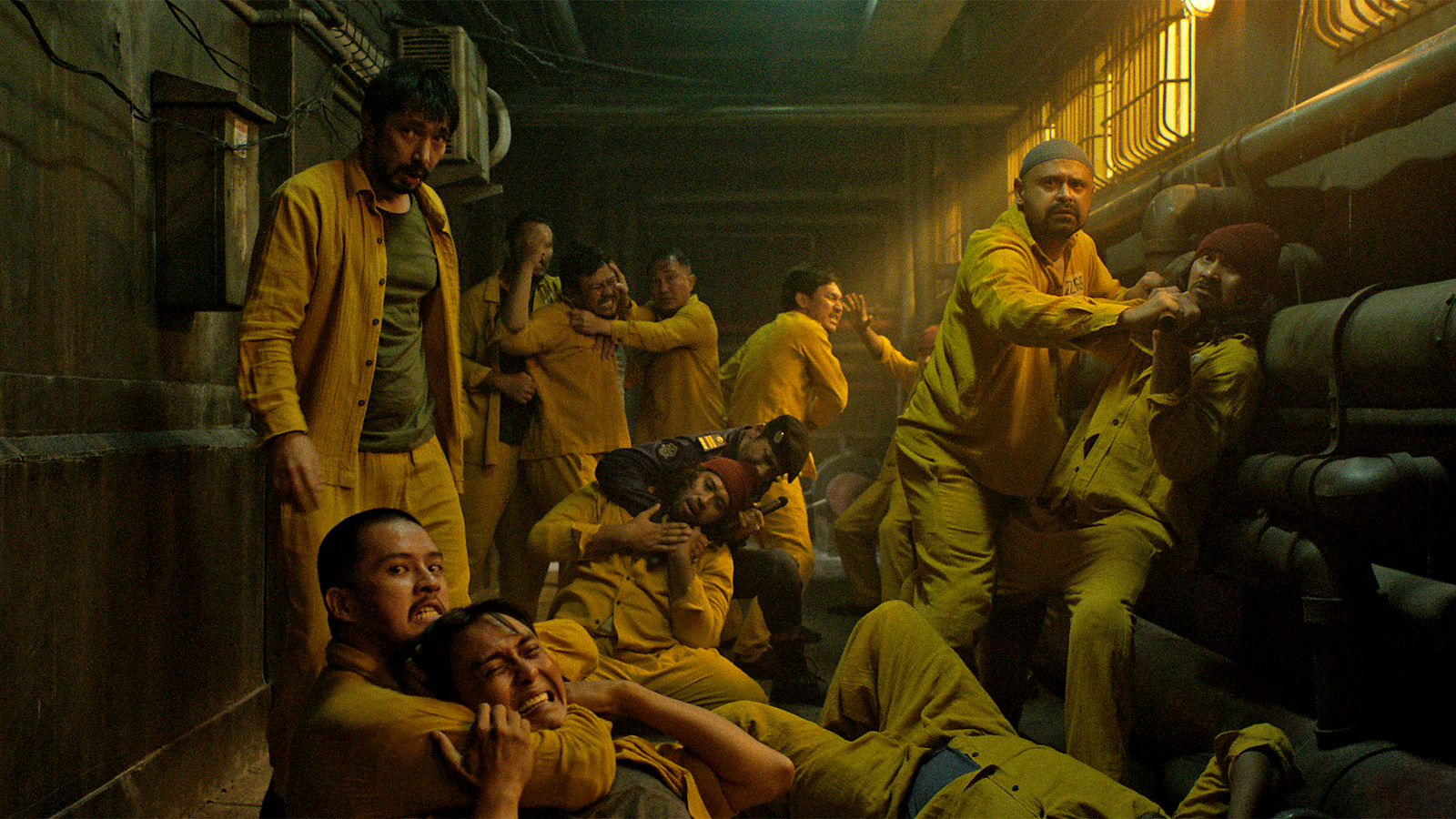
Set in a high-security prison, the film follows Anggoro (Abimana Aryasatya), an inmate counting down the final months of his sentence. When a new prisoner, Dimas, arrives, he quickly becomes a target. Following a brutal murder inside the facility, suspicion shifts toward him. As the body count rises, Anggoro and the other inmates realize they may be grappling with something far more dangerous than another prisoner.
At its best, “Ghost in the Cell” exemplifies the kind of wild genre exercise that makes Anwar’s appeal easy to understand. He blends action, horror, comedy, and prison-thriller conventions, using the setting to examine power, corruption, and systems designed to keep people divided. The prison atmosphere becomes a pressure cooker, with guards and inmates navigating a hierarchy built on intimidation and self-preservation.
Anwar excels in delivering horror. The practical effects and gore are aggressive, gruesome, and memorable, with several kills designed to make seasoned horror fans squirm. He also weaves in absurd humor, with moments where chaos is interrupted by behavior so strange you are unsure whether to laugh or brace for what follows.
Unfortunately, “Ghost in the Cell” eventually becomes too cluttered for its own good. Numerous characters, alliances, rivalries, jokes, political ideas, supernatural elements, and tonal shifts compete for attention. I found myself trying to remember who was connected to whom rather than staying invested in the story. The film moves so frantically that some characters never get the chance to develop.
This chaotic approach also weakens the mystery. Once the supernatural threat becomes clearer, the movie should tighten its grip, but instead it keeps piling on more information and personalities. The ideas are present, but the storytelling isn’t always clean enough to make them resonate.
Anwar’s ambition is hard to dismiss. “Ghost in the Cell” is violent, bizarre, funny, and occasionally inspired. I can see why his work has garnered a following, even if this film did not fully connect with me. Nonetheless, horror fans should still find enough madness here to make the experience worthwhile.
Final Grade: C+.
“Ghost in the Cell” is in limited theaters tomorrow.