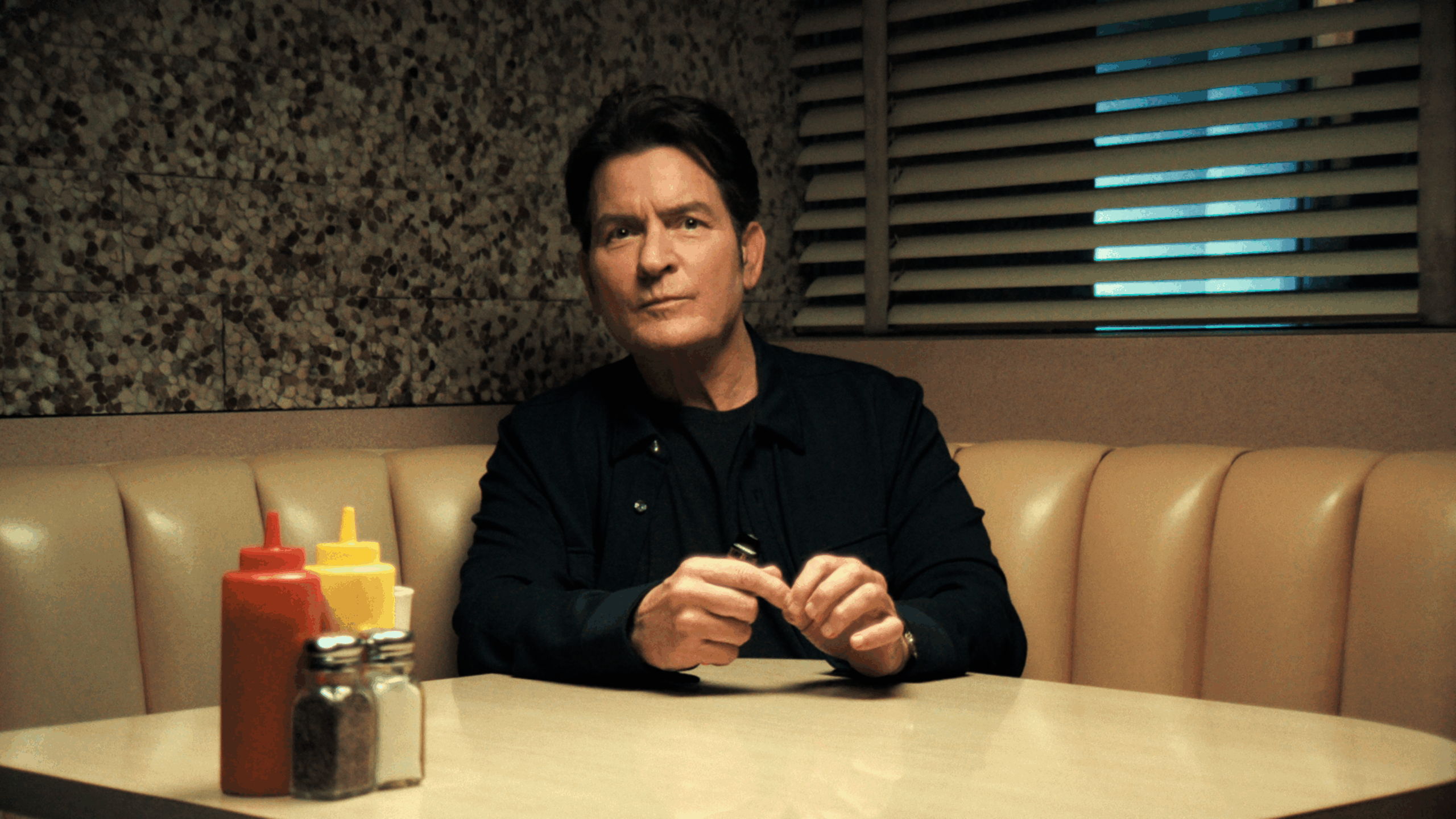
Charlie Sheen has never been a mystery. He was a headline magnet long before social media made self-destruction a form of entertainment. His struggles with drugs, alcohol, public meltdowns, failed marriages, and courtroom drama have all played out in real time, fueled by tabloids, late-night jokes, and his own unfiltered remarks about having “tiger blood” and “Adonis DNA.” So when a two-part documentary titled “AKA Charlie Sheen” arrives on Netflix, the surprise isn’t in what it reveals; it’s in how little it can actually contribute to the already well-known narrative.
Director Andrew Renzi structures Sheen’s life into three acts: “Partying,” “Partying with Problems,” and “Just Problems.” This succinct framing is effective, though it seems likely that the audience already knows the key details. What we haven’t seen much of before is Sheen’s present-day charm, as he reflects on his past from the perspective of seven years of sobriety.
He looks back with a wistful half-smile, making his story feel more like a long after-dinner anecdote than a complete reckoning. He comes across as warm, funny, and disarming, which may explain why his family—minus his father Martin and brother Emilio, who chose not to participate—still speaks of him with affection despite the chaos he has caused.
The doc’s strength lies in the candid assessments from others. Denise Richards, in particular, shares her honest experience of life with Sheen, and you can still sense a lingering care for him. His daughter, Lola, son, Bob, and even longtime family friend Tony Todd provide valuable perspectives, with Todd nearly breaking down as he recalls the fear of waking up to find Charlie dead on several occasions. These voices cut through the haze of Sheen’s narrative.
However, AKA Charlie Sheen, feels curiously soft. Issues like domestic violence, allegations, restraining orders, and accusations of exposing partners to HIV are presented less harshly. Renzi seems willing to let Sheen steer the narrative, and Sheen, ever the performer, accommodates this. Genuine remorse is more difficult to find as he appears to smile too easily when discussing his “wild years,” suggesting that nostalgia still outweighs regret for him.
The real moments of truth emerge when Heidi Fleiss, still angry decades later, expresses her contempt for him or when Jon Cryer speaks about the exhaustion of dealing with Sheen’s chaos on “Two and a Half Men”. These instances feel authentic and painful, reminding us of the damage that lies behind Sheen’s charismatic facade.
In the end, we are left with a portrait not of tragedy or redemption but of survival. Sheen is alive and sober. This may be sufficient for him, but for us, it serves as a reminder that charisma can often obscure the consequences of one’s actions—and that, much like people, documentaries can sometimes prioritize comfort over stark truth.
Final Grade: C
“AKA Charlie Sheen” is now available to stream on Netflix.