French filmmaker Luc Besson hopes to return to his glory days with an adaptation of Bram Stoker’s classic novel “Dracula” from Vertical. Besson also wrote the film’s screenplay.
I’ve been a fan of Besson’s work since I first saw “Subway” in 1985. Although he has had his share of less successful films, I was curious to see what he would bring to a literary classic. The film opens in the fifteenth century, where Prince Vladimir, played by Caleb Landry Jones, witnesses the brutal murder of his wife, Elisabeta. Devastated by his loss, he renounces God and damns heaven, an act that condemns him to eternal life.
Reborn as Dracula, he wanders through the centuries as an immortal warlord, driven by a singular obsession: reclaiming his lost love from death at any cost. In nineteenth-century Europe, the appearance of a woman resembling Elisabeta reignites his quest, setting him on a collision course with a priest sent to end his reign.
Despite the operatic framing of the narrative, the film unfolds with surprising restraint. Significant plot developments occur passively, often overshadowed by extended sequences of spectacle and atmosphere. The central romance, intended to serve as the emotional core, lacks urgency and dramatic tension. As a result, Dracula’s pursuit feels more theoretical than visceral, more conceptual than emotionally grounded.
Jones’s performance emphasizes melancholy over menace, presenting a Dracula defined by grief rather than dominion. While this interpretation aligns with Besson’s romantic intentions, it leaves the character without the magnetism necessary to anchor the film. Christoph Waltz provides a steadier presence as the unorthodox priest sworn to destroy the immortal, playing the role with seriousness and dry restraint. His scenes offer brief clarity, though they cannot compensate for the film’s broader narrative drift.
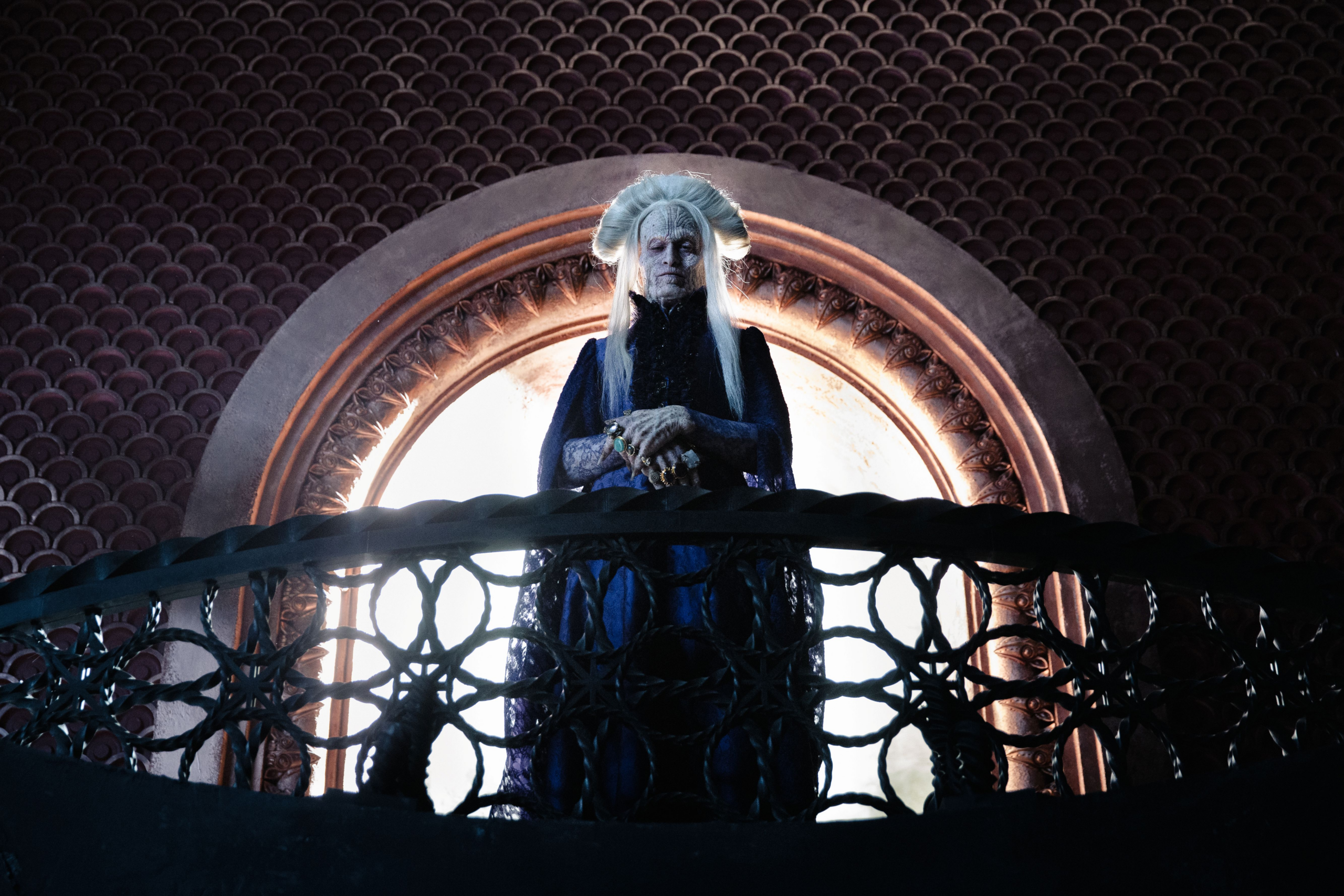
Thematically, the film explores questions of faith, abandonment, and divine silence, but these ideas are only superficially examined. Repeated philosophical exchanges fail to deepen the story, functioning more as intellectual ornamentation than meaningful inquiry. Visually, the film is often striking, favoring elaborate costumes, ornate interiors, and carefully composed tableaux. Yet these images support a story that rarely comes to life.
Ultimately, Besson delivers a visually appealing but hollow adaptation—one that prioritizes mood over momentum and beauty over consequence. Despite its ambition and visual craftsmanship, “Dracula” struggles to justify its reinterpretation, offering atmosphere in place of insight and reverence without urgency.
“Dracula” reflects a director captivated by surfaces and symbols, yet unwilling to thoroughly interrogate their meaning, resulting in an adaptation that gestures toward profundity while remaining emotionally distant and narratively unresolved
Final Grade: C-
“Dracula” opens in theaters tomorrow.