

Search
Picture of Derrick Dunn

Derrick Dunn

28 years later: “The Bone Temple” is a sequel that bites harder than the infection

The fourth installment of a popular post-apocalyptic franchise arrives with a fresh spin from director Nia Dacosta in “28 Years Later: The Bone Temple” from Sony Pictures.  Series regular Alex Garland returns to pen the screenplay.

I can understand the lukewarm response to the third film.  Thankfully, Nia DaCosta doesn’t merely inherit the world that Danny Boyle and Alex Garland built in “28 Days Later” — she exposes it to a harsher light and invites you to confront it.  “28 Days Later: The Bone Temple” is a direct continuation, but it serves as both a correction and an escalation: it features more gore, more profound dread, and a keener understanding that the real apocalypse isn’t just viral… It’s deeply personal.

Ralph Fiennes’ Dr. Kelson is introduced with a kind of weary intelligence that immediately adds gravity to his character.  He’s not portrayed as a “mad scientist” or a savior; he’s a man who has witnessed enough devastation to understand that every miracle has its price.  When Kelson makes his pivotal discovery—one that could genuinely change the balance of this universe—DaCosta presents it with restraint rather than sensationalism.  The moment resonates because she grasps something that many horror directors overlook: a revelation is more frightening when it feels plausible.

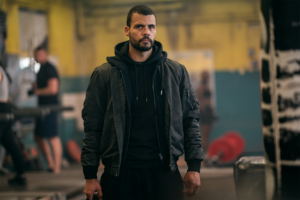
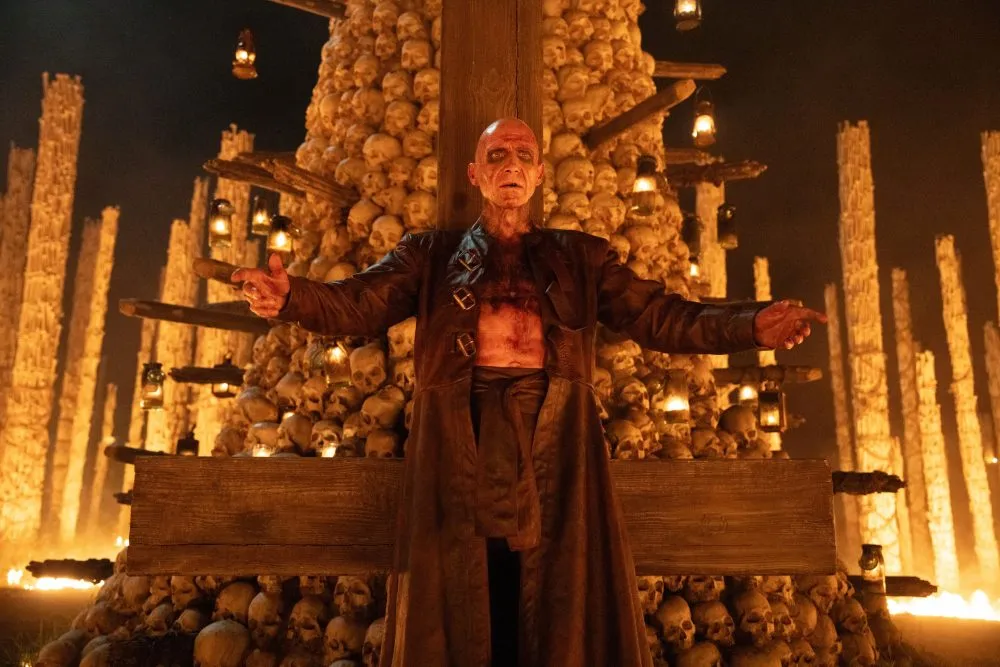
Then we have Spike (Alfie Williams), the franchise’s most effective embodiment of panic, as his fear feels authentic rather than performative.  His encounter with Jimmy Crystal (Jack O’Connell, operating on a disturbingly intense level) becomes the film’s psychological anchor—the nightmare that seems impossible to escape, because waking up doesn’t improve the reality outside.

What makes “The Bone Temple” resonate more than a simple “infected-on-the-loose” remix is its deeper insight: the survivors have morphed into their own species of threat.  DaCosta frames cruelty as a means of survival in a society that has learned to decorate brutality with rules, rituals, and a self-satisfied sense of necessity.  It’s deliberately uncomfortable, but it isn’t empty misery.  The film immerses you in the pain so that the small acts of mercy, flickers of decency, and eventual reckonings truly resonate.

Is it bleak?  Absolutely. Yet it is also controlled, confident, and frequently captivating—an engaging middle chapter that broadens the narrative while still delivering a satisfying experience.  And yes, the final images are clearly setting the stage for another sequel.  This series has always dealt with contagion; now it is equally about consequences.  “The Bone Temple” understands both aspects—and it leaves you feeling unsettled in the best possible way.

Final Grade: B+

“28 Years Later: The Bone Temple” opens in theaters today.

Movie Clappers

More reviews to explorer

Facebook
Twitter
LinkedIn

Questlove’s “Earth, Wind & Fire” Documentary Is a Celestial Celebration of Maurice White’s Vision

Ahmir “Questlove” Thompson continues to build an impressive resume as a filmmaker with his latest documentary, “Earth, Wind & Fire (To Be Celestial vs. That’s the Weight of the World)”. One of the biggest reasons I was elated to be approved for Sundance this year was the hope of seeing this one premiere. Unfortunately, I came down with a stomach bug and had to watch it on HBOMAX.