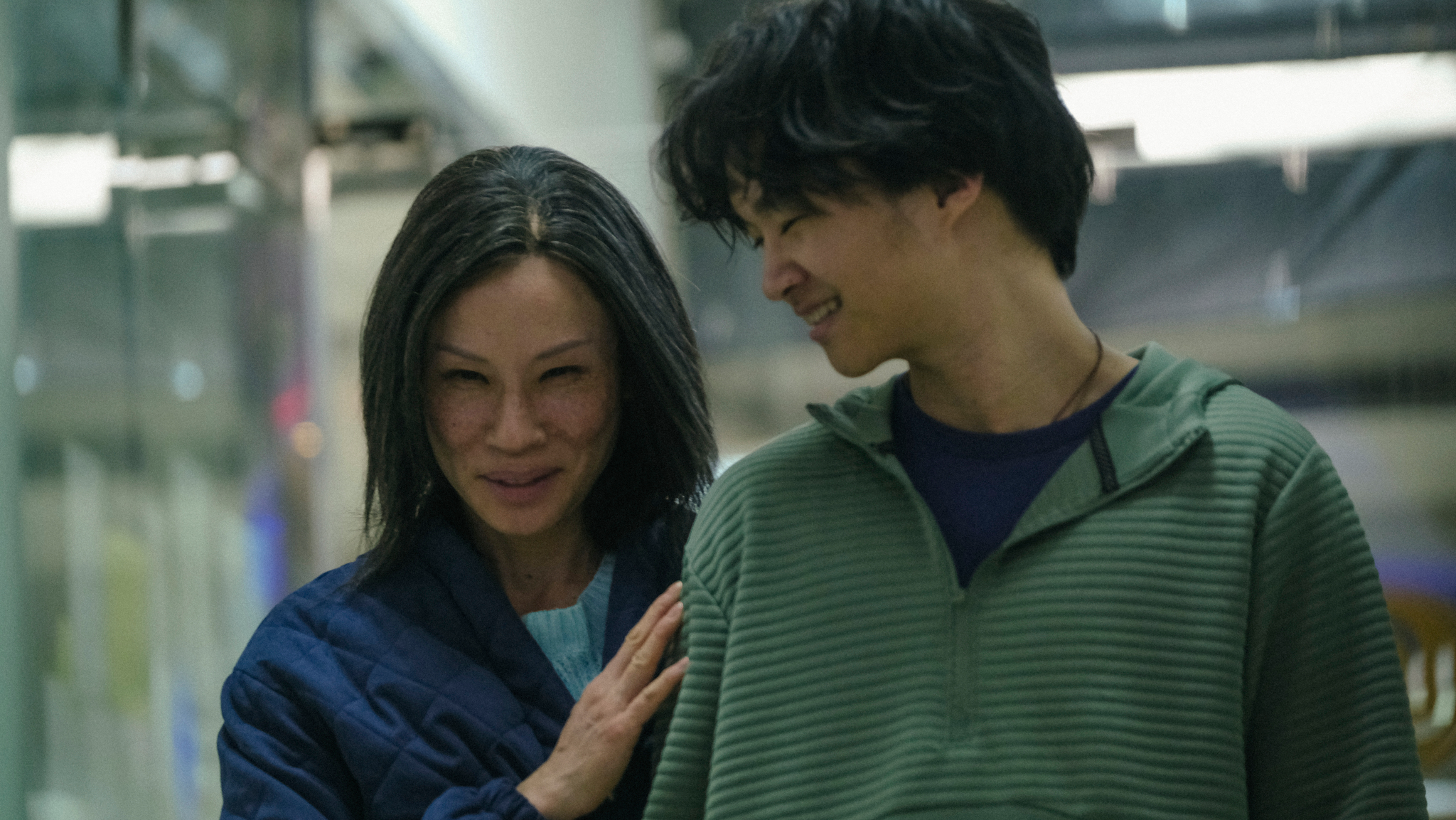
Lucy Liu continues her shift towards more dramatic roles with a career-best performance in “Rosemead” from Vertical. Eric Lin directs the film and co-writes the script with Marilyn Fu.
As a parent and a cinephile, I find that there are films you admire, films you enjoy, and then there are those that linger in your mind—heavy, unresolved, and hard to forget, even if you know you may never want to watch them again. “Rosemead” fits squarely into that last category.
At the center of the story is Irene, portrayed with fierce restraint by Lucy Liu. As an immigrant from Asia, Irene runs a modest copy shop in Rosemead, California, a community shaped significantly by its Asian American population and its quiet, everyday routines.
She has achieved her version of the American Dream—self-sufficiency, stability, and respect. However, the dream does not prepare her for what comes next: the death of her husband, hiding a terminal cancer diagnosis from her son, and witnessing the slow unraveling of the boy she loves more than anything.
Irene’s son, Joe, is played with touching vulnerability by Lawrence Shou. Once a talented swimmer, Joe is now approaching adulthood while grappling with schizophrenia. He exists in a delicate balance between treatment and isolation.
His doctor, Charles, portrayed by a quietly grounded Orion Lee, represents the healthcare system that tries—often unsuccessfully—to assist him. Irene supports that system in theory, but not in practice. For her, medication feels easier than conversations, and silence seems safer than the truth—until it no longer does.
When Irene learns of Joe’s disturbing fixation on mass shootings, the film shifts from an intimate family drama to something far more unsettling. This film is a story that could only unfold in America, where gun violence is both widespread and strangely normalized. “Rosemead” neither exploits nor softens this reality. The tension stems not from spectacle but from an insidious dread—the kind that emerges when love and fear begin to intertwine.
Much of the dialogue is in Chinese, grounding the film in authentic lived experience rather than performative representation. Liu’s accented English is not polished away; it is embraced, highlighting the cultural distance Irene still navigates after years in the country. The only adult authority figure besides the family—the doctor—has a deliberately limited role, emphasizing the isolation of this mother-son bond.
Not every choice lands perfectly. At times, the film relies on familiar visual cues to depict Joe’s mental illness, and a few emotional moments feel overly signaled. However, these missteps do not diminish the sincerity at the film’s core.
“Rosemead” is compassionate, unsettling, and deeply human. It’s the kind of film you respect more than you revisit—because experiencing it once is enough to grasp its truth, and it carries a lasting weight long after the credits roll.
Final Grade: B+
“Rosemead” is in limited release now and begins a wide rollout on Friday, January 9th.